
Views: 57 Author: Site Editor Publish Time: 2026-04-30 Origin: Site


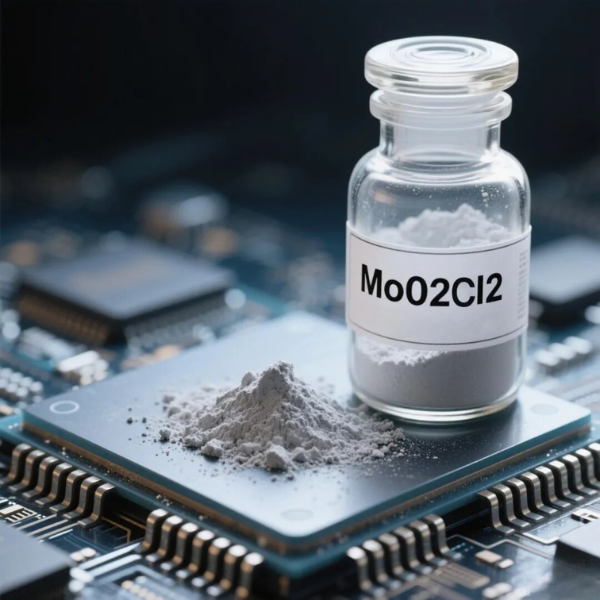
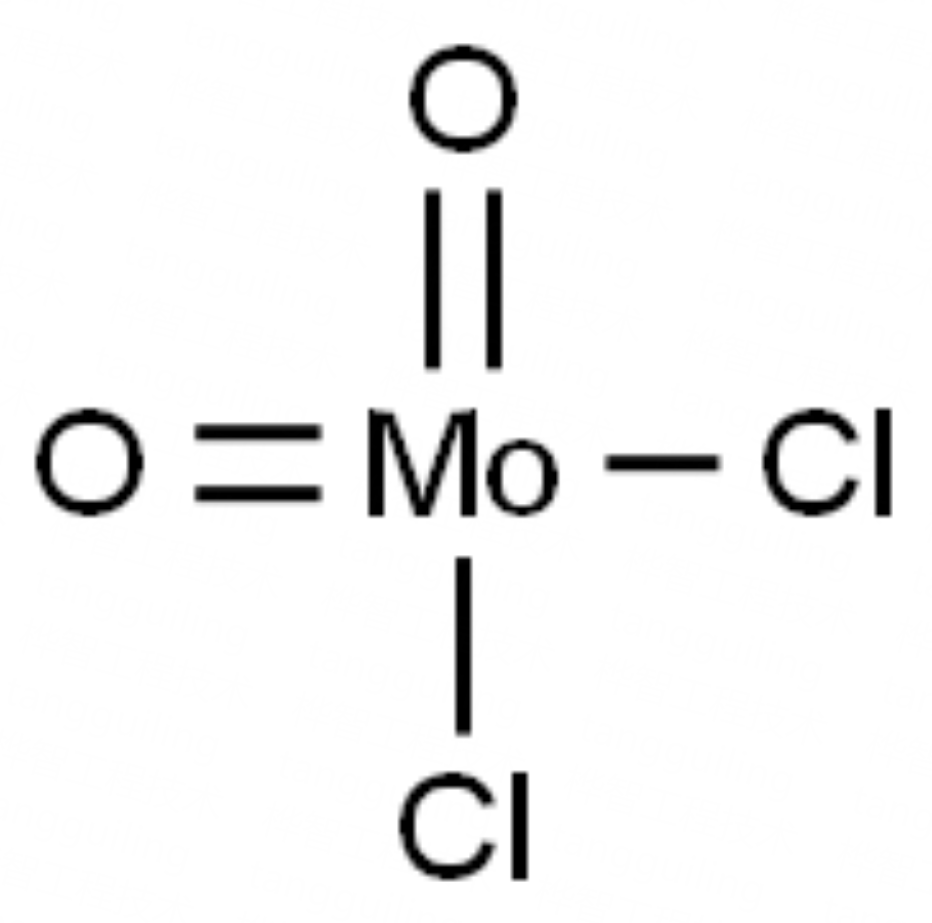
Chemical Formula | MoO₂Cl₂ |
Molecular Weight | 198.84 |
CAS No. | 13637-68-8 |
English Name | Molybdenum(VI) Dichloride Dioxide |
Appearance | Yellow to orange crystalline or powdery substance |
As semiconductor manufacturing processes continue to advance toward smaller technology nodes, the development of novel precursor materials has become one of the key drivers of technological progress.
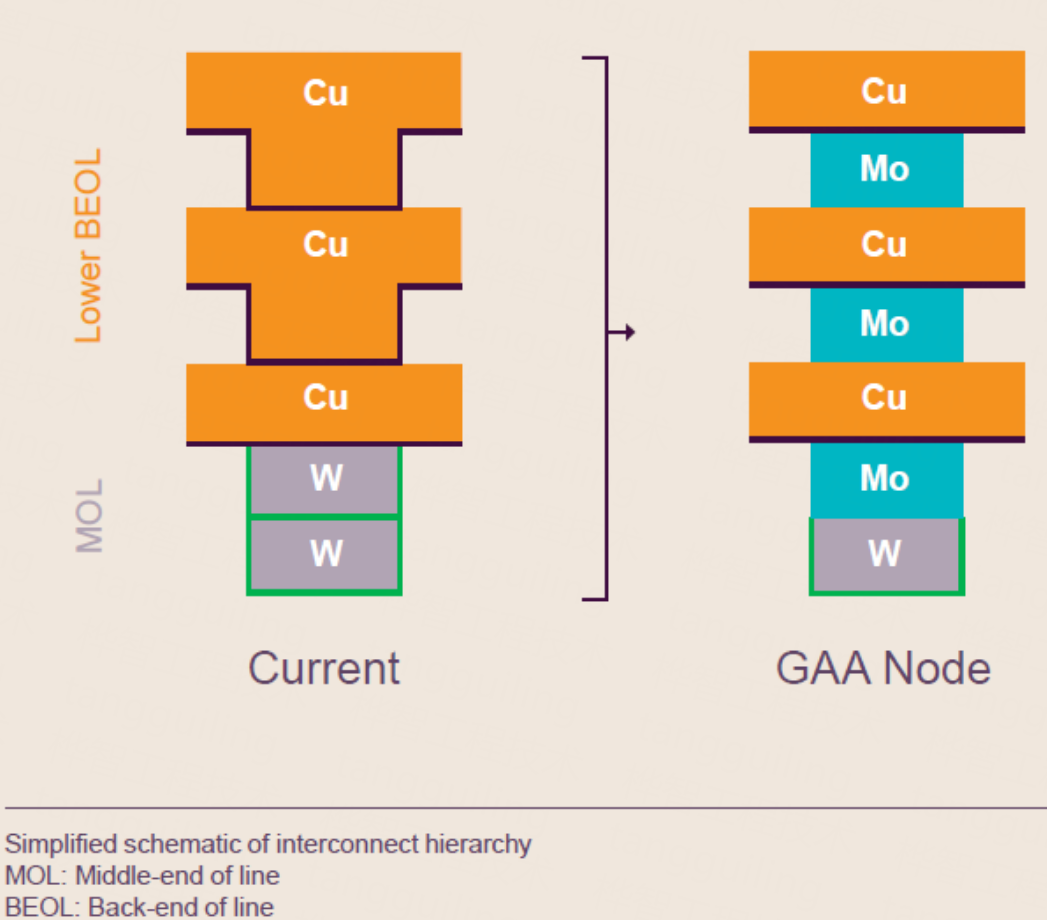
With the widespread adoption of Gate-All-Around (GAA) transistor technology in advanced processes below 7 nm, molybdenum (Mo) layers are gradually replacing traditional tungsten (W) and copper (Cu) layers in interconnect materials.
Due to its unique physicochemical properties — including an extremely high melting point, low thermal expansion coefficient, low resistivity, and high thermal conductivity — molybdenum thin films are emerging prominently in the semiconductor industry. They are regarded as key candidate materials for next-generation devices and provide new material solutions for advanced semiconductor processes.
Currently, MoCl₅ is the most commonly used molybdenum source in chemical vapor deposition (CVD) processes. However, MoO₂Cl₂ demonstrates better gap-filling performance, forms films with lower resistivity, and exhibits less corrosiveness toward barrier materials such as TiN. In addition, MoO₂Cl₂ has a higher vapor pressure, making it easier to transport into the reaction chamber.
Another advantage of using MoO₂Cl₂ is that it does not generate fluoride impurities. In the past, WF₆ was commonly used for tungsten deposition, but residual fluorine could corrode devices and increase resistance.
MoO₂Cl₂ is fluorine-free, and each molybdenum atom carries only two chlorine atoms. Compared with highly chlorinated precursors such as MoCl₅, it can reduce chlorine byproducts and chlorine residue in the film.
Of course, there are also certain limitations when using MoO₂Cl₂ as an ALD precursor. Since MoO₂Cl₂ is a solid, its vapor pressure is not as stable as that of liquid precursors, making transportation and dosing more challenging and requiring precise control.
Therefore, MoO₂Cl₂ is usually placed in a heated evaporator to maintain sublimation at a controlled temperature, while a carrier gas (such as Ar) is used to transport its vapor, with strict dosage control.
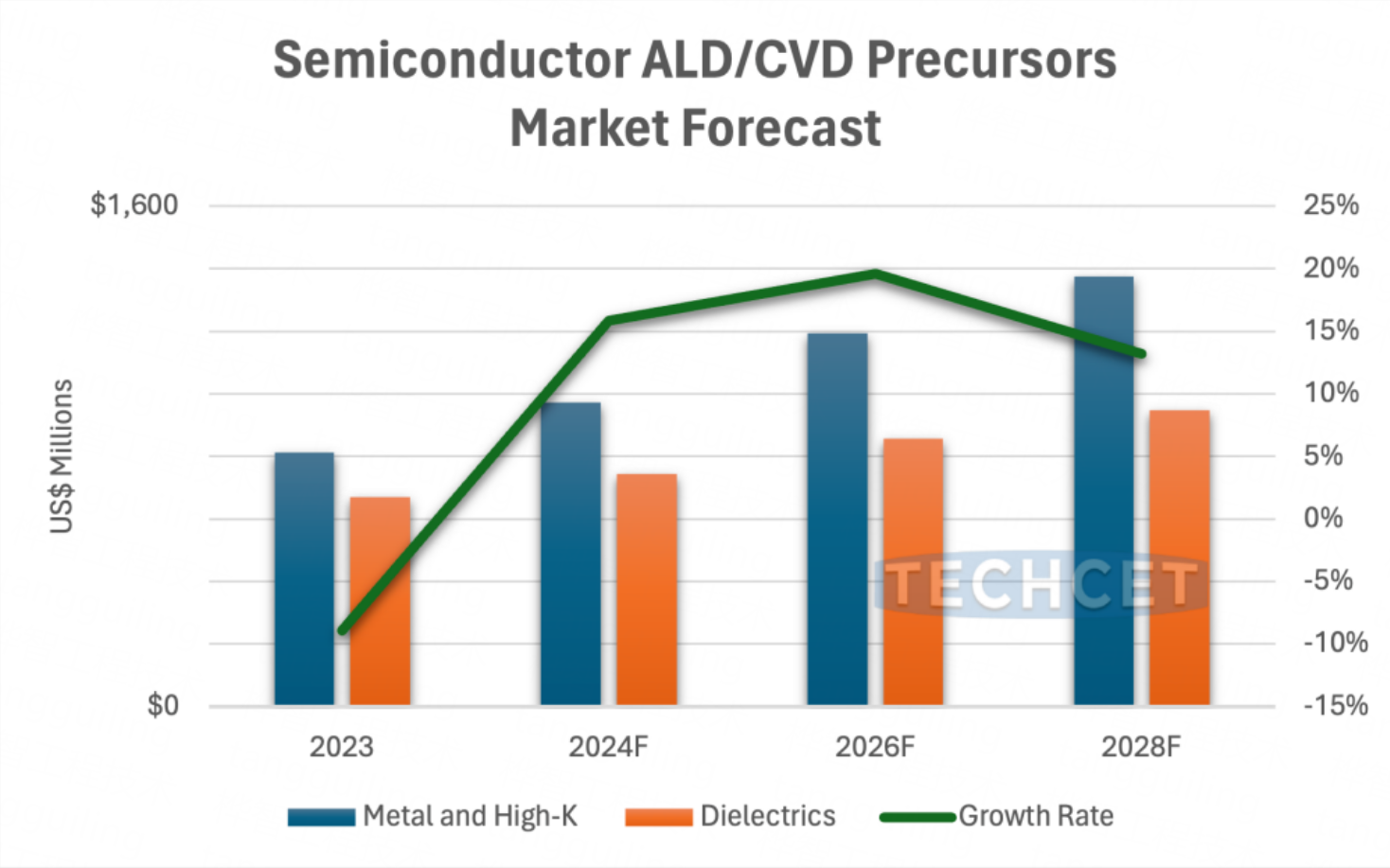
Nevertheless, industry interest in MoO₂Cl₂ precursors continues to grow rapidly. According to the TECHCET 2024 report, molybdenum precursors — especially MoO₂Cl₂ — are expected to achieve the highest five-year compound annual growth rate (up to 50%) among semiconductor metal precursors.
This growth is driven by the excellent electrical performance of molybdenum in next-generation devices such as gates and interconnects, as well as the increasing demand for fluorine-free CVD processes.
As transistor gates transition from polysilicon to metal gates, the industry’s demand for new metallic materials is becoming increasingly urgent. Tungsten faces challenges in advanced processes due to fluorine residue issues caused by WF₆. Molybdenum is an attractive alternative, but historically the lack of suitable precursors has hindered its adoption. The emergence of MoO₂Cl₂ effectively fills this gap.
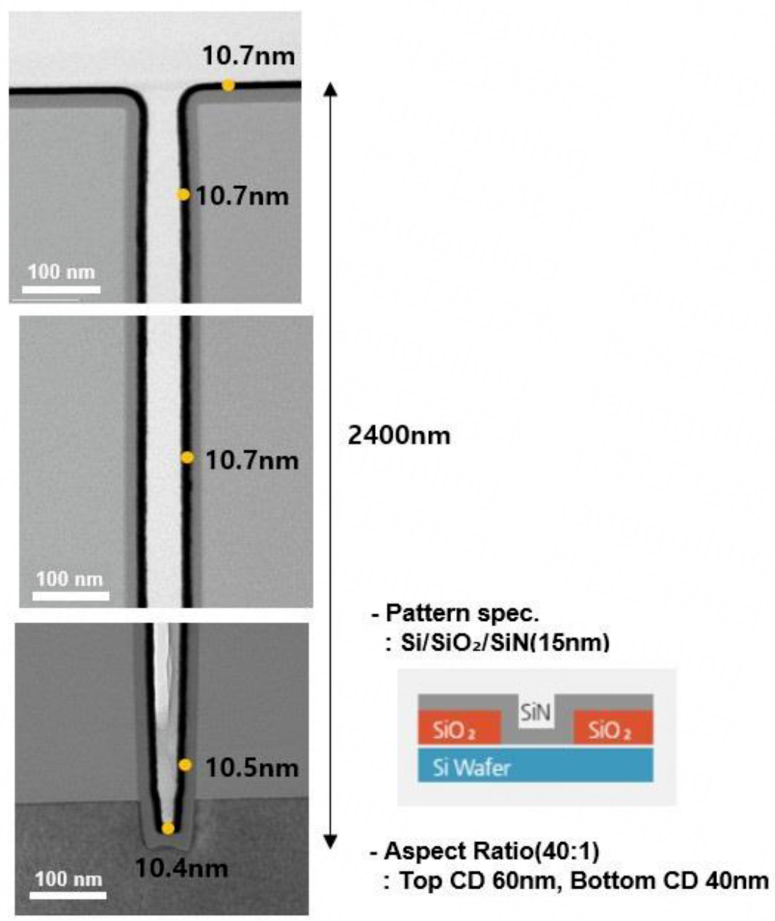
Research by Lee et al. [1] demonstrated that using MoO₂Cl₂ as a precursor, high-purity molybdenum thin films with resistivity as low as 12.9 μΩ·cm (impurity content <1 at%) can be obtained through chemical vapor deposition (CVD) or atomic layer deposition (ALD) processes at temperatures of 600–650°C.
These films exhibit excellent conformality of approximately 97% in nanoscale trenches, fully meeting the requirements for interconnect metals in advanced processes. Higher deposition temperatures (~650°C) result in better crystallinity and lower resistivity of the molybdenum films. At 650°C, the resistivity even approaches that of bulk molybdenum, demonstrating excellent electrical conductivity.
Although 650°C is relatively high, it is acceptable for certain front-end processes such as gate formation in wafer fabrication. The authors also attempted to reduce the process temperature by alternately depositing thin molybdenum nitride (MoN) layers during molybdenum deposition. This interlayer strategy successfully produced pure molybdenum films at approximately 600°C.
Therefore, Mo metal deposited using MoO₂Cl₂ can serve as an interconnect material capable of replacing tungsten.
In comparison, although Mo(CO)₆ precursors have also been explored in ALD processes, they may introduce carbon impurities or require plasma assistance. Organometallic amine-ligand molybdenum precursors (such as Mo(NR₂)₄) are easier to reduce, but they suffer from poor stability and are prone to decomposition, making them unsuitable for high-temperature processes.
In contrast, MoO₂Cl₂ exhibits better thermal stability (melting point: 175°C and smooth sublimation around 200°C), enabling it to withstand higher process temperatures without decomposing or clogging supply lines.
Compared with MoCl₅, MoO₂Cl₂ contains less chlorine and is less likely to cause severe equipment corrosion, which has allowed it to quickly gain favor in semiconductor material evaluations.
The resistivity of molybdenum (5.3 μΩ·cm at 25°C) is slightly higher than that of copper but lower than that of tungsten (5.6 μΩ·cm). In addition, molybdenum is not affected by electromigration issues to the same extent as copper, allowing it to replace tungsten as a low-resistance material in certain applications.
For example, in CMOS metal gate structures or vertical interconnects in 3D memory devices, molybdenum demonstrates better performance than tungsten due to its excellent interface stability with high-k dielectrics and low impurity content.
In Lam Research’s process [2], a molybdenum layer is first deposited using MoO₂Cl₂ chemistry, followed by the deposition of a thicker tungsten or molybdenum layer on top. This molybdenum layer acts as a crystallization-promoting liner, enabling larger grain sizes and lower stress in subsequent metal layers, thereby reducing overall resistance.
This stepwise deposition strategy fully leverages the precise thickness control capability of MoO₂Cl₂ in ALD and the rapid thick-film deposition advantage of tungsten CVD. The fluorine-free and high-purity molybdenum thin layers deposited using MoO₂Cl₂ significantly improve interface conductivity and reliability.
MoO₂Cl₂ is rapidly transitioning from laboratory research to semiconductor manufacturing applications. It provides a fluorine-free, low-chlorine, and highly controllable molybdenum precursor that enables the successful deposition of high-quality molybdenum metal thin films. These films are suitable for interconnects, vias, and contacts between the first metal layer and silicon-based devices, making them an ideal choice for low-resistivity molybdenum-containing films in DRAM and 3D NAND applications.
From an industry perspective, major material suppliers are actively expanding the production capacity of precursors such as MoO₂Cl₂ to meet the growing demand for molybdenum precursors in future chip manufacturing.
It can be anticipated that MoO₂Cl₂ will play a key role in future logic devices, 3D memory, and emerging computing-storage integrated units, providing semiconductor processes with lower-resistance and more reliable metal interconnect solutions.
Wolfa can stably supply precursors such as molybdenum dioxide dichloride, molybdenum hexacarbonyl, and tungsten hexacarbonyl. Customized products are also available. If you have any related product requirements, please feel free to contact us!
No. | English Name | CAS Number | Chemical Formula |
1 | Molybdenum dichloride dioxide | 13637-68-8 | MoO2Cl2 |
2 | Molybdenum hexacarbonyl | 13939-06-5 | Mo(CO)6 |
3 | Tungsten hexacarbonyl | 14040-11-0 | W(CO)6 |
4 | Chromium hexacarbonyl | 13007-92-6 | Cr(CO)6 |
5 | Cobalt carbonyl | 10210-68-1 | Co2(CO)8 |
6 | Tetracobalt dodecacarbonyl | 17786-31-1 | Co4(CO)12 |
7 | Dicarbonylcyclopen-tadienyl cobalt | 12078-25-0 | CpCo(CO)2 |
8 | (3,3-dimethyl-1-butyne) dicobalt hexacarbonyl | 56792-69-9 | CCTBA |
9 | Ruthenium chloride hydrate | 14898-67-0 | RuCl3·xH2O |
10 | Triruthenium dodecacarbonyl | 15243-33-1 | Ru3(CO)12 |
11 | Bis(ethylcyclopentadienyl) ruthenium | 32992-96-4 | Ru(EtCp)2 |
12 | Tetrakis(dimethylamino) hafnium | 19782-68-4 | TDMAH |
13 | Tetrakis(dimethylamino) zirconium | 19756-04-8 | TDMAZ |
14 | Tetrakis (dimethylamino) titanium | 3275-24-9 | TDMAT |
15 | Tetrakis (dimethylamino) tin | 1066-77-9 | TDMASn |
[1] Baek-Ju Lee, et al. Coatings 2023, 13(6), 1070. DOI: https://doi.org/10.3390/coatings13061070
[2] <Low resistivity films containing molybdenum> US12074029B2.


