
Views: 66 Author: Site Editor Publish Time: 2026-01-08 Origin: Site


Organic chemicals are carbon-based compounds that can serve as raw materials, solvents, intermediates, ligands, and functional materials. From coatings and polymers to semiconductor manufacturing, many industries rely on organic chemicals. However, a chemical name alone does not fully capture a product's industrial value; factors such as purity, impurity profile, process stability, packaging, and supply consistency are equally important.
This article introduces the main types, production processes, application areas, and key purchasing considerations for organic chemicals.
Organic chemicals are a class of compounds based primarily on carbon atoms. In most organic compounds, carbon bonds with hydrogen and other carbon atoms via covalent bonds to form straight-chain, branched, or cyclic structures. Carbon can also bond with elements such as oxygen, nitrogen, sulfur, phosphorus, silicon, and halogens, resulting in a wide variety of molecular structures.
Organic chemicals include hydrocarbons as well as a wide range of compounds containing functional groups such as alcohols, amines, ketones, esters, and carboxylic acids. However, not all carbon-containing compounds are classified as organic. Under traditional chemical classification, simple carbon oxides—such as carbon monoxide and carbon dioxide—along with carbonates, bicarbonates, carbides, and many cyanides, are generally categorized as inorganic compounds. Therefore, the distinction between organic and inorganic substances cannot be based solely on whether a compound contains carbon.
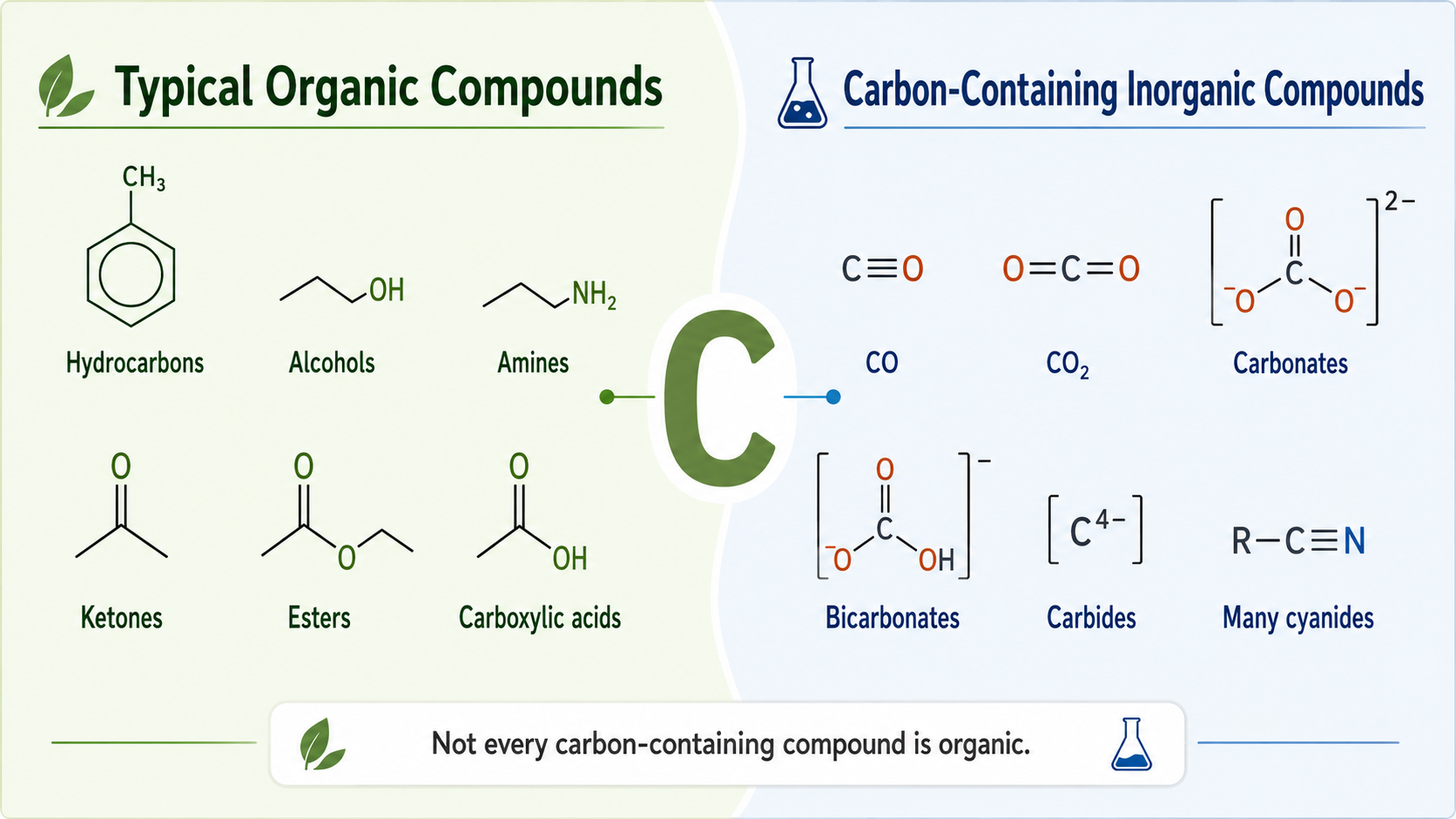
Organic chemicals can be classified either by their molecular structure or by their industrial function.
| Chemical Category | Common Examples | Typical industrial applications |
| Hydrocarbons | Alkanes, alkenes, aromatic hydrocarbons | Raw materials, solvents, and monomers |
| Oxygen-containing compounds | Alcohols, ethers, ketones, acids, esters | Solvents, intermediates, and functional materials |
| Nitrogen-containing compounds | Amines, amides, nitriles | Ligands, catalysts, and specialty synthesis |
| Halogenated compounds | Fluorine-, chlorine-, and bromine-containing molecules | Electronic chemicals and synthetic intermediates |
| Heterocyclic compounds | Pyridine, imidazole, furan | Ligands, catalysts, and optoelectronic materials |
A single molecule may contain multiple functional groups simultaneously; this is frequently the case with organic ligands and custom-designed functional molecules.
Commodity chemicals are produced in massive quantities, and their selection is primarily based on standard specifications, availability, and price.
Fine chemicals are produced in relatively small quantities and typically require stricter controls regarding molecular structure, purity, and impurity content.
Specialty chemicals are primarily selected based on their specific functions, such as chemical reactivity, optical properties, thermal characteristics, or compatibility with specific processes.
Electronic-grade and ultra-high-purity chemicals are primarily used in applications requiring strict control over trace metals, moisture, ionic residues, particles, and other critical impurities. Examples include high-purity organic ligands, functionalized cyclopentadienes, intermediates for electronic materials, and organic raw materials used in the synthesis of organometallic precursors.
Understanding the manufacturing process helps assess a supplier's technical capabilities and supply reliability.
Early-stage development typically encompasses the screening of reaction conditions, the selection of catalysts or reagents and solvents, and the control of parameters such as temperature, pressure, and feed rate. The objective is not only to enhance yield but also to minimize the formation of difficult-to-remove by-products and establish a practical purification process.
When multiple variables may interact, Design of Experiments (DoE) can be employed to systematically evaluate the factors and their interactions. DoE facilitates the identification of critical parameters and the determination of robust operating ranges.
Before process scale-up, it is essential to understand the thermal behavior of the reaction. Screening parameters may include the heat of reaction, heat release rate, gas generation, reactant accumulation, and the thermal stability of the reaction system. For highly exothermic reactions or those involving semi-batch feeding, reaction calorimetry (e.g., using an RC1) can be employed to assess cooling capacity requirements, adiabatic temperature rise, and the risk of unreacted material accumulation . Our process chemists also evaluate the potential impact of deviations such as feed interruptions, reaction delays, or cooling system failures.
For molecules sensitive to air or moisture, the reaction environment itself is an integral part of product quality. Wolfa conducts the preparation of ligands and metal complexes under inert conditions and scales up suitable processes from the gram level to the kilogram level.
Organic chemicals can be purified using methods such as fractional distillation, recrystallization, sublimation, extraction, filtration, or drying. The specific method depends on the product's volatility, thermal stability, solubility, and the behavior of the impurities.
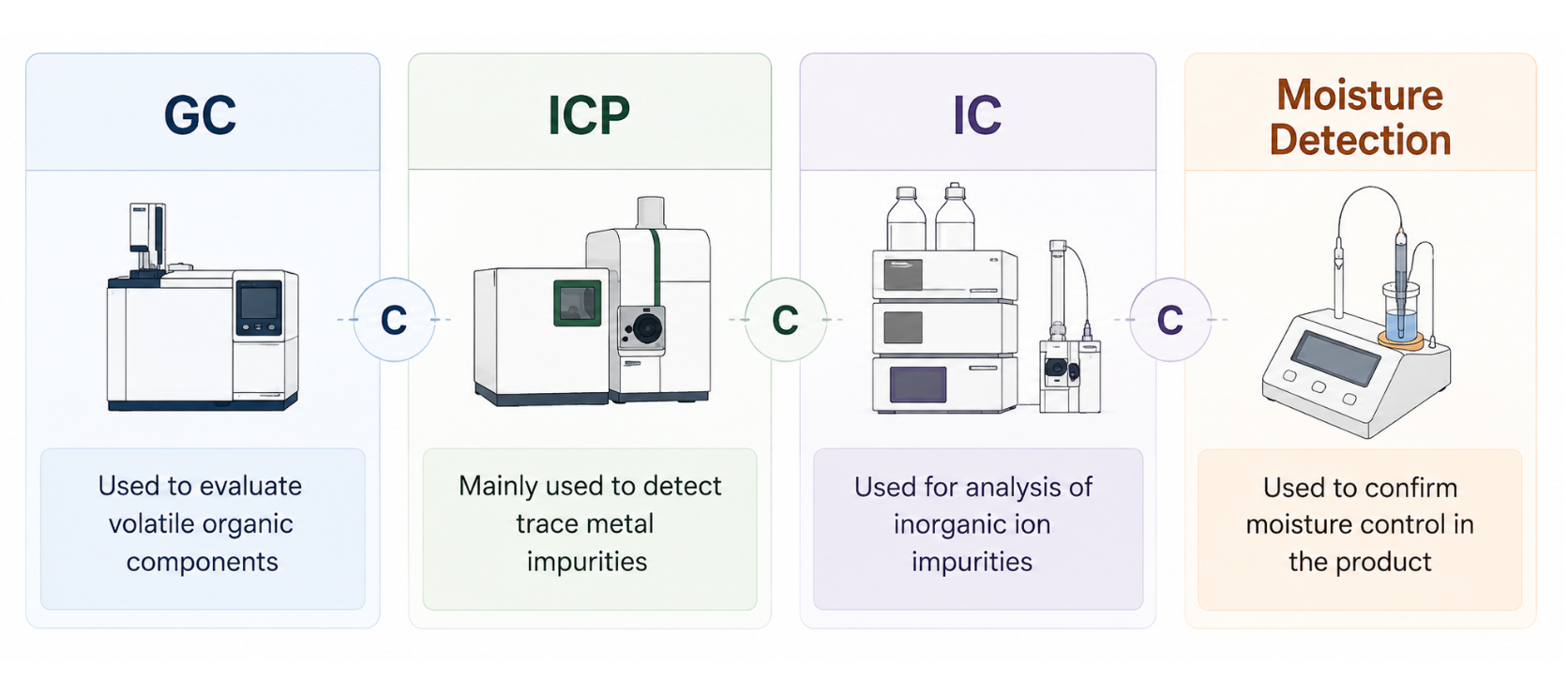
Purification and analytical methods should be developed concurrently. Wolfa’s purification capabilities encompass fractional distillation, sublimation, and recrystallization, while its analytical platform includes GC, ICP-MS, ICP-OES, IC, FT-IR, and moisture analysis. GC is used to evaluate volatile organic components; ICP-based techniques primarily detect trace metals; IC is employed for the analysis of certain ionic impurities; and moisture analysis serves to verify moisture control in the product.
Organic chemicals are widely used in fields such as electronic materials, organometallic synthesis, and catalysis. In high-value-added applications, molecular structure and impurity control directly affect the performance of downstream products.
Organic ligands are central components in the design of coordination complexes and organometallic compounds. Upon coordination to a metal center, ligands modify the electronic environment and steric hindrance, thereby influencing the complex's geometry, stability, and reactivity. In catalyst design, these factors further determine catalytic activity and selectivity; for organometallic precursors, ligand structure can also affect critical properties such as volatility and thermal stability.
Common ligands include cyclopentadienyl and amine-containing ligands; relevant products include 1-isopropyl-1,3-cyclopentadiene (used to prepare isopropyl-substituted cyclopentadienyl ligands), CIM (a ligand intermediate with a Cp-amine structure), and the amino alcohol ligand 1-(diethylamino)-2-methyl-2-propanol.
With the miniaturization of hardware and improvements in performance, the role of organic chemicals in the electronics industry has become increasingly prominent. Such chemicals are commonly referred to as "electronic chemicals."
Organic chemicals play a crucial role in semiconductor manufacturing, particularly in the photolithography process. Photoresist is a photosensitive organic polymer that determines the precision of circuit patterns on chips. As manufacturing processes advance to the nanoscale, purity requirements for photoresists and other wet electronic chemicals have shifted from the parts-per-million (ppm) level to the parts-per-billion (ppb) or even parts-per-trillion (ppt) level.

Beyond the semiconductor sector, organic chemicals also serve as a cornerstone of advanced materials science.
For example, in the field of display technology, OLED screens rely on specific organic light-emitting materials to achieve high contrast and flexible display capabilities. In the consumer electronics and automotive industries, high-performance polymers and coatings are widely used to provide functionalities such as heat resistance, electrical insulation, electrical conductivity, and corrosion resistance.
Organic compounds can serve as ligands, reagents, and intermediates in catalytic reactions, and their structures can influence reaction rate, conversion, and selectivity.
Some projects require modified ligands or entirely new molecules. Consequently, custom organic synthesis is essential when target compounds are unavailable from standard catalogs or when there are specific requirements regarding purity, impurities, and packaging.
A purity result of 99.0% or 99.9% does not fully describe the product quality. Purchasers should understand the method used to obtain this figure and the specific impurities included.
For high-purity organic chemicals, the impurity present in the highest concentration is not necessarily the one with the greatest impact. For instance, functionalized cyclopentadienyl ligands may show high purity by GC analysis yet still retain residual lithium, sodium, magnesium, or halides. These impurities can carry over into the subsequent synthesis of metal complexes and affect the final outcome.
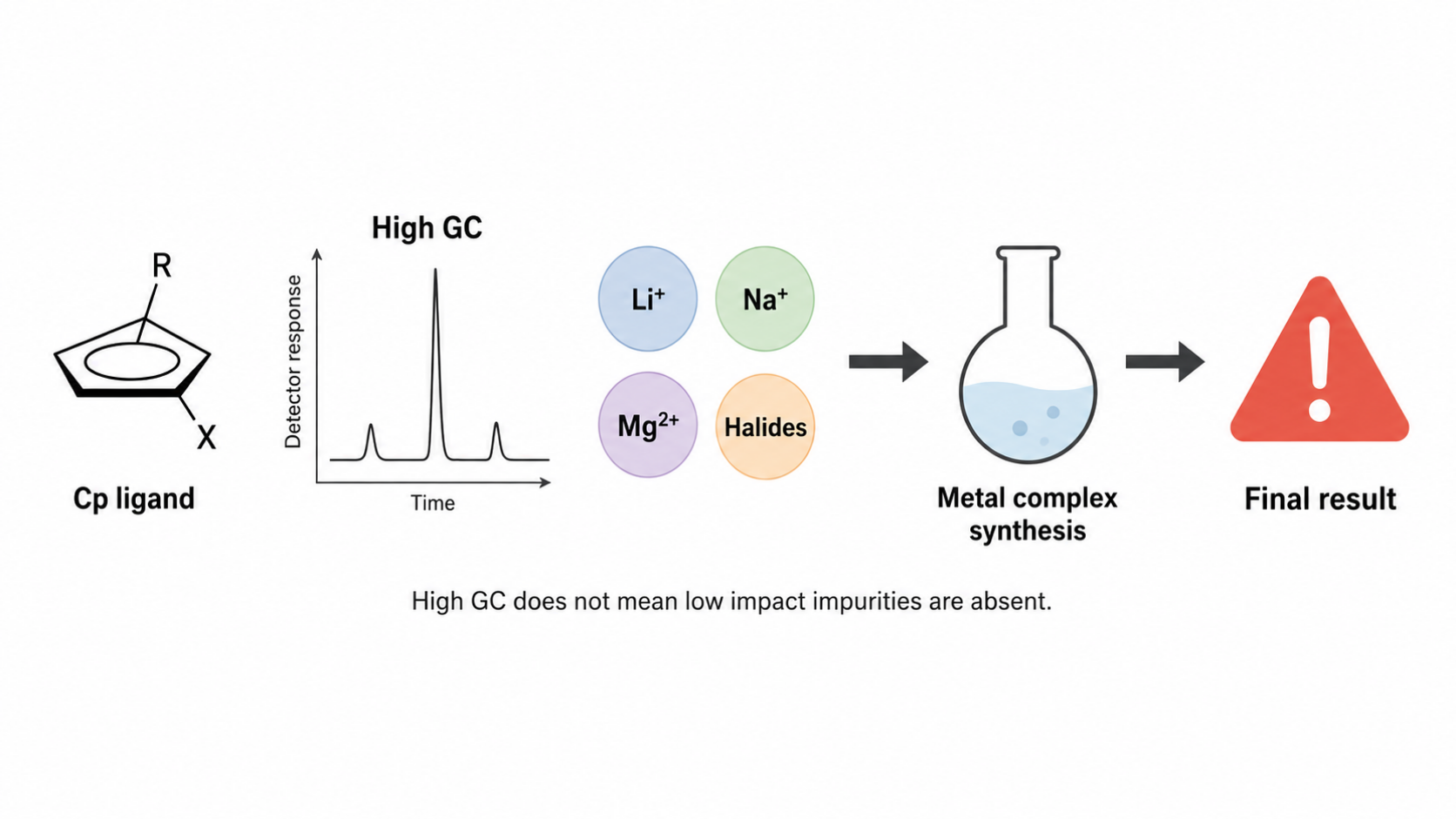
While the impact of small amounts of water on ordinary solvents may be limited, in moisture-sensitive ligand and organometallic synthesis, water can consume active reagents or cause hydrolysis. In electronic materials, trace amounts of sodium, potassium, or iron may also be more significant than organic impurities that are present in higher concentrations but are less reactive.
Therefore, product specifications should be established based on actual usage rather than relying solely on nominal purity.
No single analytical method can fully verify the quality of a product. GC or HPLC can be used to separate and quantify organic components; NMR and FT-IR are suitable for structural confirmation; ICP-MS and ICP-OES can detect elemental impurities; IC is applicable to certain ionic impurities; and moisture content typically requires a dedicated test method.
The COA document should list core information such as test results, specification limits, and the corresponding test methods. For custom materials, the supplier and the customer should jointly confirm critical quality attributes prior to scale-up.
Packaging requirements vary significantly depending on the specific chemical. For instance, trimethylaluminum (TMA) is extremely sensitive to air and moisture, necessitating hermetic filling under an inert atmosphere. Metal-amine precursors such as TDMAT and TDMAH readily react with moisture; consequently, residual moisture in containers must be controlled, and nitrogen or argon blanketing is typically employed.
Meanwhile, metal carbonyl compounds—such as tungsten hexacarbonyl and chromium hexacarbonyl—exhibit volatility or tendency to sublime, requiring packaging made of compatible materials with excellent airtightness to minimize leakage and product loss.
Thus, packaging is not merely a matter of logistics but an integral component of product quality control.
Batch consistency depends on raw material quality, reaction and purification processes, analytical methods, and storage conditions.
Suppliers should maintain traceability of critical process parameters and batch records, and manage changes—such as those to raw material sources, process conditions, or packaging methods—to prevent fluctuations in product purity, impurity levels, or performance characteristics.
Given that many organic solvents and reactants are flammable, corrosive, or toxic, every chemical entering the supply chain must be accompanied by an up-to-date Safety Data Sheet (SDS). This document not only details the chemical's physical hazards and health risks but also outlines operational procedures for emergencies such as spills or fires. For enterprises engaged in international trade, possessing an SDS that complies with the Globally Harmonized System of Classification and Labelling of Chemicals (GHS) is essential.
From a broader legal perspective, compliance has become a prerequisite for entering the chemical industry.
In the European market, the REACH regulation mandates the rigorous registration, evaluation, and authorization of chemicals entering the EU, aiming to protect human health and the environment; similarly, in the United States, the Toxic Substances Control Act (TSCA) imposes strict controls on the production and use of new chemical substances.
In addition, enterprises must comply with regulations set by the International Maritime Organization (IMO) and local environmental authorities regarding the transport and storage of hazardous chemicals. Failure to comply could result in substantial fines and disrupt the supply chain.
Suppliers are required to provide SDS and transportation information, while purchasers and importers must also verify their own regulatory obligations. Upon request, Wolfa can provide the SDS for the relevant products for reference.
Driven by technological innovation and the concept of sustainable development, the global organic chemicals market is undergoing profound transformation.
The most significant current trend is the rise of "green chemistry."

Traditional organic synthesis often relies on fossil fuels and generates significant waste; however, the industry is shifting its focus toward developing synthetic pathways that offer higher atom economy and lower energy consumption. This involves using more environmentally friendly solvents, developing highly efficient catalysts to reduce the number of reaction steps, and adopting continuous-flow reaction technologies to replace traditional batch production.
At the same time, the concept of sustainable development is reshaping raw material procurement patterns. Driven by increasing attention to carbon footprints, market demand for bio-based chemicals continues to grow. The use of biomass—such as plant fibers and oils—as a substitute for petroleum in the production of alcohols, acids, and polymers has reached the stage of commercial-scale production.
The market winners of the future will be comprehensive enterprises capable of providing "products plus technical solutions," rather than mere suppliers of raw materials.
The fundamental reason organic chemicals continue to play a vital role in modern industry is that their highly diverse molecular structures can meet increasingly specialized application requirements. As performance demands for materials rise in sectors such as electronic materials, organometallic chemistry, and other high-value-added fields, the market focus is shifting from merely "obtaining a specific compound" to "obtaining a compound truly suited to a specific process."
This means that the future competitiveness of organic chemicals will increasingly hinge on a deep understanding of product quality, application needs, and compliance requirements, while specialized capabilities in synthesis, purification, and analysis serve as the foundation for translating this understanding into stable products.

